
 Sign In


Every statistic in this article was checked against its original source on October 21, 2026.
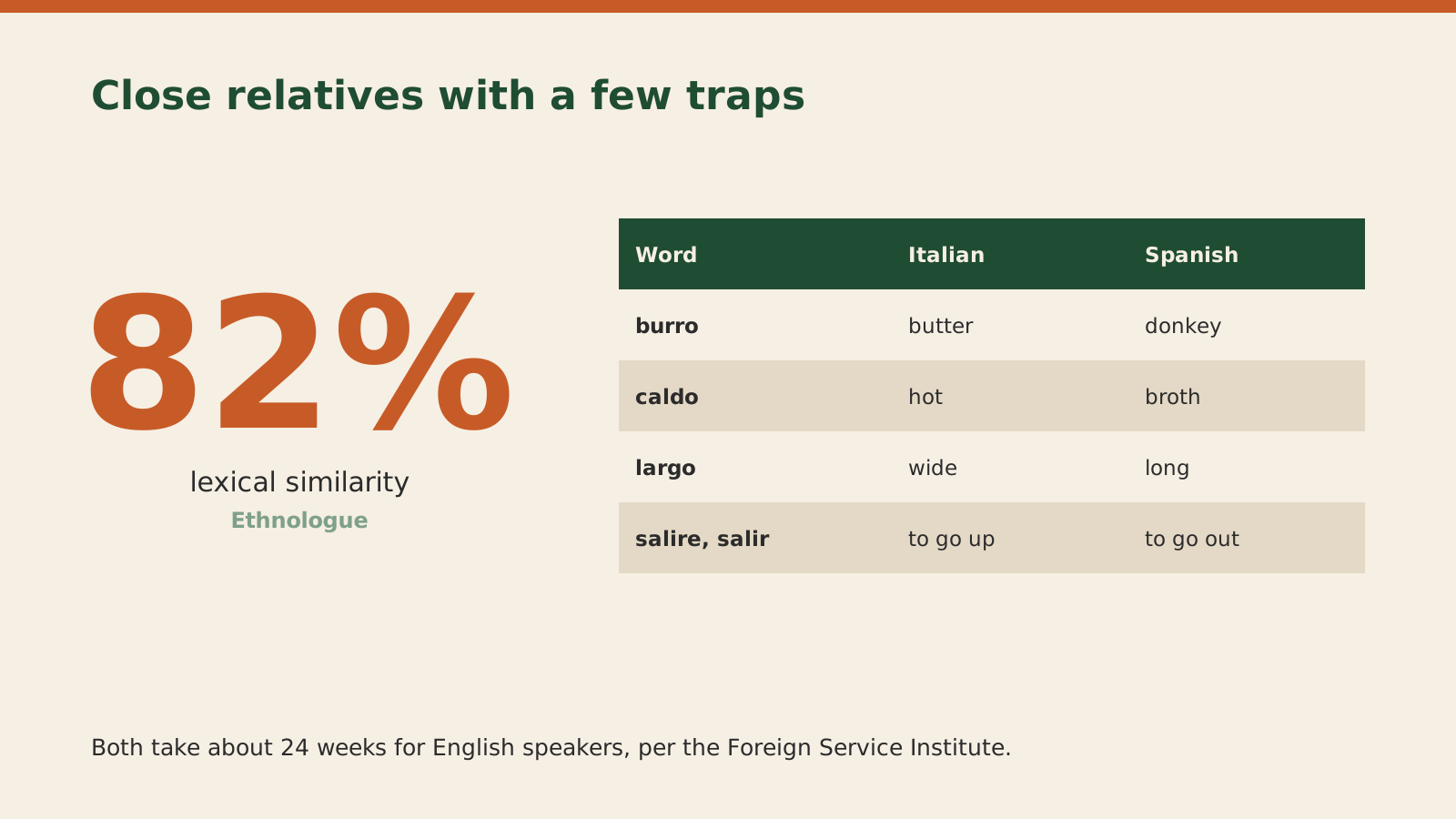
Italian and Spanish are very close: Ethnologue has rated their vocabulary as 82 percent similar, and their grammar follows the same Latin blueprint. They still sound different, use different articles and plurals, and share a set of false friends that catch learners off guard.
That mix of closeness and surprise is why the Italian vs Spanish question comes up so often, especially from students who already know one of the two. This guide compares them head to head and helps you decide which to learn first. For live one to one classes, see the LanguageBird Italian program and the Spanish program.
Quick Answer
Italian and Spanish are both Romance languages, and the US Foreign Service Institute places both in its fastest group for English speakers, at about 24 weeks of full time study for Italian and 30 weeks for Spanish. Ethnologue has estimated 82 percent lexical similarity between them. The main differences are pronunciation, articles, plurals and a handful of false friends.
Key Takeaways
- Ethnologue has rated the lexical similarity of Italian and Spanish at 82 percent, meaning most words are recognizably related.
- The Foreign Service Institute lists Italian at 24 weeks, or about 600 class hours, and Spanish at 30 weeks, or about 750, for English speakers.
- Italian plurals change the final vowel, libro becomes libri, while Spanish plurals add an s, libro becomes libros.
- Italian has double consonants that change meaning, as in pena (pity) and penna (pen).
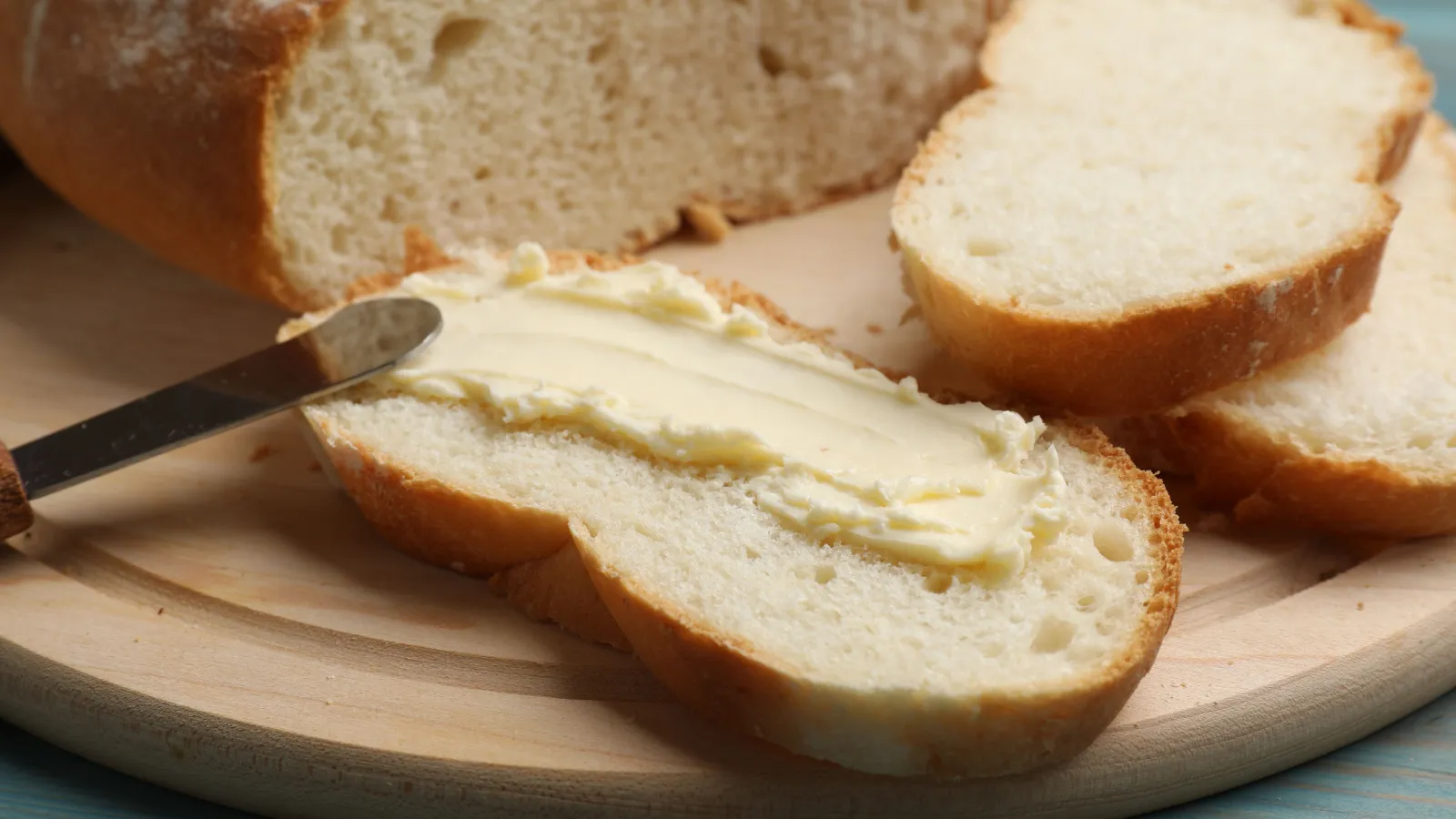
- False friends such as burro, which means butter in Italian and donkey in Spanish, cause the most memorable mistakes.
Is Italian similar to Spanish?
Yes. Italian and Spanish are two of the closest major languages in the world, because both grew out of spoken Latin. Most everyday words, most grammar patterns and the basic sentence order line up.
| Feature | Italian | Spanish |
|---|---|---|
| Language family | Romance | Romance |
| Lexical similarity | 82 percent with Spanish (Ethnologue) | 82 percent with Italian (Ethnologue) |
| FSI estimate | 24 weeks, about 600 hours | 30 weeks, about 750 hours |
| Vowel sounds | Seven, with open and closed e and o | Five |
| Plurals | Change the final vowel: casa, case | Add s or es: casa, casas |
| Definite articles | il, lo, l’, la, i, gli, le | el, la, los, las |
| Conversational past | Mostly passato prossimo: ho mangiato | Preterite in Latin America, often he comido in Spain |
| Where it is official | Italy, San Marino, Switzerland, Vatican City | 21 countries across four continents |
The Instituto Cervantes 2025 yearbook counts about 635 million people who can use Spanish, while Italian is concentrated in Europe. That difference in reach often decides which language students pick first.
How similar are Spanish and Italian words?
Most common words are related, and many are nearly identical. A Spanish speaker reading an Italian menu or sign will usually get the gist.
| English | Italian | Spanish |
|---|---|---|
| house | casa | casa |
| water | acqua | agua |
| book | libro | libro |
| to eat | mangiare | comer |
| to speak | parlare | hablar |
| today | oggi | hoy |
| thank you | grazie | gracias |
The table also shows the limit of that similarity. Mangiare and comer, or parlare and hablar, come from different Latin roots. Basic verbs are where Italian and Spanish part ways most often, so they need real study.
How is Italian pronunciation different from Spanish?
Italian pronunciation differs from Spanish in vowels, double consonants and a few letter combinations. Spanish speakers usually find Italian sounds learnable, but their Spanish accent shows until they practice these points.
- Italian has seven vowel sounds, because e and o can each be open or closed. Spanish has five.
- Italian double consonants are held longer and change meaning: pena means pity, penna means pen; caro means dear, carro means cart.
- Italian ce and ci sound like English ch, so cena is pronounced chena.
- Italian gli and gn have their own sounds, as in famiglia and gnocchi.
- Spanish has sounds Italian lacks, such as the j in jamón and, in most of Spain, the th sound in cielo.
How is Italian grammar different from Spanish?
Italian and Spanish grammar run on the same system, so the differences are details more than structure. These are the ones learners notice first.
| Point | Italian | Spanish |
|---|---|---|
| Plural nouns | libro, libri; casa, case | libro, libros; casa, casas |
| Articles with prepositions | Combine often: del, nella, sul, dalla | Combine only twice: del, al |
| Past tense helper | Avere or essere: ho mangiato, sono andato | Always haber: he comido, he ido |
| Polite you | Lei, which uses the she form of the verb | usted, which uses the he or she form |
| Partitive “some” | Uses del, della: vorrei del pane | Usually no word: quiero pan |
The choice between avere and essere in the past is the grammar point Spanish speakers practice longest, because Spanish always uses haber.
Which Italian and Spanish words are false friends?
False friends are words that look the same in both languages but mean different things. They are where Spanish speakers make their most memorable Italian mistakes.
| Word | Meaning in Italian | Meaning in Spanish |
|---|---|---|
| burro | butter | donkey |
| salire / salir | to go up | to go out |
| caldo | hot | broth |
| largo | wide | long |
| guardare / guardar | to look at | to keep |
| camera / cámara | room | camera |
| aceto / aceite | vinegar | oil |
Can Spanish speakers understand Italian?
Spanish speakers can usually understand a lot of written Italian and a fair amount of slow, clear speech without study. Fast conversation is much harder, because Italian rhythm, vowel sounds and contractions blur the shared words.
Reading comes first because spelling preserves the Latin roots. Listening takes longer, which is why a Spanish speaker can follow an Italian article but miss half of a casual conversation. With a few months of practice, that gap closes quickly. Our overview of languages similar to Spanish compares Italian with Portuguese and French on the same points.
Originally from Northern Italy and fluent in Italian (my native language), English, and Spanish, I’ve spent over 15 years exploring the rich connections between language and culture through teaching and education.
Camilla D, Italian Instructor at LanguageBird
Do Italians speak Spanish?
Spanish is not an official language in Italy, so most Italians do not speak it fluently. Many study Spanish at school, and the shared vocabulary helps Italians follow simple written Spanish and some slow speech. In practice, an Italian and a Spanish speaker can often get by in a simple exchange, each speaking their own language slowly.
What do people get wrong about Italian and Spanish?
Their closeness leads to a few predictable assumptions.
| Common belief | What is actually true |
|---|---|
| Italian is Spanish with different endings | Basic verbs, articles and sounds differ, and they need real study |
| If you speak Spanish, you already speak Italian | You will read a lot, but speaking and listening still take months |
| Similar languages are always faster | Similar words can make learners lazy about false friends and pronunciation |
| You cannot study both | Many people do, usually after reaching a solid level in the first |
| Italian sounds the same as Spanish | Double consonants and seven vowels make Italian sound distinct |
Should you learn Italian or Spanish first?
For most US students, Spanish is the practical first choice because of how many people speak it in the Americas. Italian is the better first choice for students drawn to Italy, art, music, food or family heritage. Whichever comes first, the second will go faster.
| If you want to | Start with |
|---|---|
| Use the language often in the United States | Spanish |
| Travel across Latin America and Spain | Spanish |
| Study art, music, opera or design | Italian |
| Connect with Italian family or heritage | Italian |
| Add the other language later | Either, since each speeds up the other |
Our article on how similar French and Italian are helps if you are weighing a third Romance language, and our piece on learning a Romance language as an English speaker covers what the first year feels like. LanguageBird teaches both Italian and Spanish in live one to one classes with native level instructors, so a student can begin with either language.
Frequently Asked Questions About Italian vs Spanish
How similar are Spanish and Italian?
Very similar. Ethnologue has estimated their lexical similarity at 82 percent, so most words are recognizably related, and both languages follow the same Latin based grammar. They differ in pronunciation, articles, plurals and some basic verbs, such as mangiare and comer for to eat, and they share false friends like burro.
Is Italian easier to learn if you know Spanish?
Yes, knowing Spanish saves a lot of time. Most vocabulary, gender, verb tenses and sentence order carry over, so Spanish speakers often reach conversational Italian much faster than English speakers starting from zero. The work goes into pronunciation, the avere and essere past tense, Italian plurals and false friends.
Can Spanish and Italian speakers understand each other?
Partly. Reading is the strongest skill, since spelling keeps the shared Latin roots visible. Slow, clear speech is often understandable too. Fast conversation is much harder, because vowels, rhythm and contractions differ. Speakers who use simple words and speak slowly can usually hold a basic exchange in their own languages.
Do Italians speak Spanish?
Most Italians do not speak Spanish fluently, since it is not an official language in Italy. Many study it at school, and the shared vocabulary helps Italians read simple Spanish and follow slow speech. Italian is official in Italy, San Marino, Switzerland and Vatican City, while Spanish is official in 21 countries.
Which is more useful, Italian or Spanish?
For most US students, Spanish is more useful day to day, because the Instituto Cervantes 2025 yearbook counts about 635 million people who can use it. Italian is valuable in art, design, music, food, fashion and travel, and for students with Italian heritage. Both languages make the other faster to learn later.
Should I learn Spanish and Italian at the same time?
Most teachers recommend reaching a solid conversational level in one before starting the other. Studying both from zero causes learners to mix up similar words, endings and false friends. Once one language is stable, the 82 percent shared vocabulary makes the second move noticeably faster, and mixing them up becomes less common.
Can high school students take Italian or Spanish for credit online?
Yes. Students can take either language through an accredited online school when their own school does not offer it or does not fit their schedule, and transfer the credit once a counselor approves it. LanguageBird offers accredited middle and high school credit in Italian and Spanish through live one to one classes with native level instructors. See the high school course catalog for both languages.
Learn Italian or Spanish With a Live Instructor
The similarity between Italian and Spanish works in your favor only if someone catches the slips: the Spanish vowel in an Italian word, the wrong helper verb, the burro at breakfast. That correction is fastest in conversation.
LanguageBird offers live one to one classes with native level instructors in more than a dozen languages. Students can earn accredited middle and high school credit, and our A to G approved courses count toward University of California admission requirements. Explore the Italian program and the Spanish program, or browse the high school course catalog.
Sources
- US Department of State, Foreign Service Institute: Foreign Language Training (opens in a new tab)
- Instituto Cervantes, El español en el mundo 2025 (yearbook)
- Ethnologue, lexical similarity estimates